The rapid advancement of artificial intelligence in healthcare has ushered in a new era of diagnostic capabilities, yet the boundaries of AI diagnostic systems remain a subject of intense debate. While these technologies promise unprecedented efficiency and accuracy, their limitations and ethical implications cannot be overlooked. The conversation surrounding their application is as much about technological potential as it is about human responsibility.
The Promise and the Hype
AI diagnostic systems have demonstrated remarkable proficiency in analyzing medical images, detecting patterns, and even predicting patient outcomes. From identifying early-stage tumors in radiology scans to flagging rare genetic disorders, these tools are transforming how clinicians approach diagnosis. The allure lies in their ability to process vast datasets far beyond human capacity, reducing the risk of oversight and fatigue-related errors.
However, the enthusiasm surrounding these systems often overshadows their current limitations. While AI can excel in narrow, well-defined tasks, it struggles with the nuanced, holistic understanding that experienced physicians bring to patient care. The technology remains fundamentally reactive—it interprets data but cannot replicate the intuitive leaps or contextual awareness that often lead to breakthroughs in complex cases.
The Human-Machine Interface
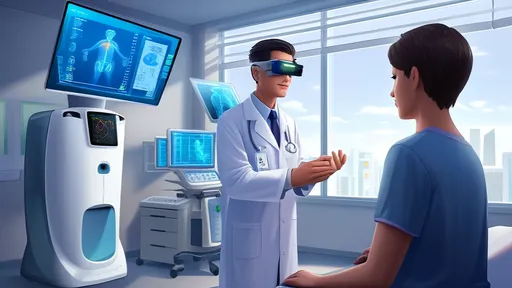
One critical boundary for AI diagnostics lies in the handoff between algorithmic analysis and clinical decision-making. No matter how sophisticated the system, final determinations must remain the physician's responsibility. This creates a delicate balance where AI serves as an advisor rather than an authority, augmenting human expertise without replacing medical judgment.
The integration challenge becomes particularly apparent when systems encounter edge cases or contradictory information. Unlike humans who can weigh uncertainties and make judgment calls, AI typically operates within the parameters of its training data. When faced with novel presentations or comorbid conditions outside its experience, the technology may fail silently—providing confident but incorrect assessments.
Data Limitations and Biases
Another fundamental constraint stems from the data that powers these systems. AI diagnostic tools are only as good as the information used to train them, which often reflects historical biases in healthcare. Underrepresented populations, rare conditions, and atypical presentations may not receive adequate attention in training datasets, leading to disparities in diagnostic accuracy across patient demographics.
Furthermore, the black-box nature of many advanced algorithms creates transparency issues. When an AI system recommends a diagnosis, clinicians often cannot interrogate its reasoning process with the same clarity as they might challenge a human colleague's assessment. This opacity becomes problematic when trying to reconcile conflicting opinions or explain decisions to patients.
Regulatory and Ethical Frontiers
The legal landscape surrounding AI diagnostics remains unsettled. Questions of liability—when an incorrect AI-assisted diagnosis leads to patient harm—have yet to be fully resolved. Unlike traditional medical devices with clear approval pathways, adaptive AI systems that continue learning post-deployment present novel regulatory challenges.
Ethical considerations extend beyond accuracy and safety. The psychological impact on patients receiving diagnoses from machines, the potential for over-reliance on technology among clinicians, and the commercialization of diagnostic algorithms all raise concerns that the healthcare community must address as adoption increases.
The Road Ahead
As the technology matures, establishing appropriate boundaries for AI diagnostic systems will require ongoing collaboration between technologists, clinicians, ethicists, and policymakers. The goal should not be to create the most autonomous diagnostic tool possible, but rather to develop systems that meaningfully enhance medical practice while respecting its human foundations.
The most promising applications may lie in areas where AI can handle routine screenings and preliminary analyses, freeing physicians to focus on complex cases and patient interaction. This division of labor acknowledges both the strengths of machine intelligence and the irreplaceable value of human touch in medicine.
Ultimately, the boundaries of AI diagnostics are not fixed technological barriers but evolving thresholds determined by societal values, clinical needs, and our collective wisdom in balancing innovation with prudence. As we navigate this terrain, maintaining clear-eyed perspective about both capabilities and limitations will be crucial for realizing the technology's benefits without compromising patient care.
By /Jul 14, 2025

By /Jul 14, 2025

By /Jul 14, 2025
By /Jul 14, 2025

By /Jul 14, 2025
By /Jul 21, 2025
By /Jul 14, 2025

By /Jul 14, 2025

By /Jul 14, 2025

By /Jul 14, 2025

By /Jul 14, 2025
By /Jul 14, 2025

By /Jul 14, 2025

By /Jul 14, 2025
By /Jul 14, 2025
By /Jul 21, 2025
By /Jul 14, 2025
By /Jul 21, 2025

By /Jul 14, 2025
By /Jul 14, 2025
